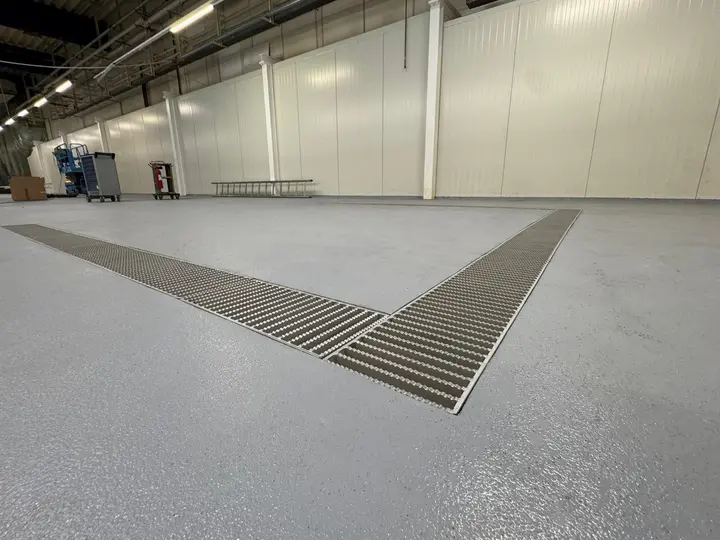
What grade of stainless steel do you use for pharmaceutical and chemical laboratory drains?
We use V4A stainless steel (1.4404 / AISI 316L). The molybdenum addition increases resistance to chlorides, acids and salts, making it ideal where floors and drains contact aggressive chemicals. For milder conditions, V2A stainless steel (1.4301 / AISI 304) is also available.
Why do you recommend V4A instead of V2A for laboratory environments?
V2A (1.4301 / AISI 304) is a standard hygienic grade, yet V4A (1.4404 / AISI 316L) offers superior chemical resistance in the presence of chlorides, acids and salts. Molybdenum improves durability of channels and floor drains in laboratories and pharmaceutical plants.
Which flooring works best with laboratory drainage systems?
Pair stainless steel floor drains with chemically resistant, easy-to-clean resin floors. We install seamless epoxy and polyurethane-cement Ucrete surfaces (up to 120 °C) that are hygienic and matched to site loads and chemicals.
Do your drains meet pharmaceutical hygiene requirements?
Yes. All products hold PZH certification and the company is an EHEDG member, confirming hygienic design. TIG/MIG welds and smooth surfaces support HACCP compliance by facilitating cleaning and reducing contamination risk.
What types of drainage systems do you offer for pharmaceutical facilities?
We supply slot channels with 8–20 mm openings and floor drains in load classes B125 to F900. Solutions are selected according to traffic intensity, cleaning methods and hygiene needs. Seamless integration with flooring ensures easy maintenance.
Can you provide material certificates for the stainless steel?
Yes. On request we issue 3.1 mill certificates according to EN 10204, documenting the grade and properties of the stainless steel (V2A or V4A). This documentation is essential in pharmaceutical and laboratory settings.